Risk-based patch management
Ransomware attacks increase in frequency and severity every year — with devastating impact on businesses. Research puts the average total cost of a data breach at $4.88 million — a 10% jump from 2023 and the biggest increase since the pandemic.1
Attacks are only going to increase as technology and AI advance. Ransomware as a service (RaaS) enables just about anyone to launch an attack — no security knowledge or coding expertise required. An increase in vulnerabilities leads to an increase in risk; exploitation of vulnerabilities increased 180% year over year.2 Research from Google shows that zero-day exploits have increased by 50% year over year.3 Worse yet, the age of AI hacking is here. Researchers at the University of Illinois trained AI agents to autonomously hack websites to discover and exploit zero-day vulnerabilities.4
Patching to fix common vulnerabilities and exposures is one of the best things an organization can do to counter ransomware attacks. Unfortunately, 71% of IT and Security professionals find patching overly complex and time-consuming.5 That may be due to the overwhelming volume of vulnerabilities. Well over 340,000 vulnerabilities are listed in the U.S. National Vulnerability Database (NVD).6 While only a small percentage are tied to ransomware, and an even smaller percentage are active exploits, identifying which ones pose the most risk to your organization can be tricky.
Ivanti Neurons for Patch Management provides actionable threat intelligence, patch reliability insight, and device risk visibility across Windows, MacOS, Linux, and third-party applications. These key insights enable IT teams to prioritize and remediate the vulnerabilities that most endanger their organization. By leveraging Ivanti Neurons for Patch Management to increase the efficiency and effectiveness of their patching efforts, organizations can better protect themselves from data breaches, ransomware, and other threats that stem from software vulnerabilities.
Key features and capabilities
Risk-based prioritization
Ivanti Neurons for Patch Management uses a risk-based prioritization strategy to target patches that address critical vulnerabilities first — especially those related to ransomware. By focusing on patches that mitigate the highest risks, IT teams can efficiently allocate resources to other strategic priorities, streamline the patch management process, and enhance security effectiveness. This approach promptly addresses severe vulnerabilities, significantly reducing the risk of ransomware and other security breaches — and thereby maintaining a robust defense in a complex threat environment.
Active threat context
Enhance your IT security by prioritizing critical vulnerabilities with an advanced Vulnerability Risk Rating (VRR) system. This rating surpasses traditional CVSS scores by including real-world risk evaluations. Our VRR system ranks patches using detailed insights into adversarial risks, such as intelligence on exploits and ransomware-related vulnerabilities. Strengthened by high-quality data and expert validation from penetration testing teams, the VRR system directs remediation efforts effectively, significantly boosting your defenses against active and potential threats.
Deploy by risk
As vulnerabilities increase, vendors consistently release updates to address them. This is crucial for mitigating risks, particularly with zero-day exploits or public disclosures. However, aligning these continuous updates with organizations’ typical monthly maintenance schedules is challenging — leaving security gaps for weeks.
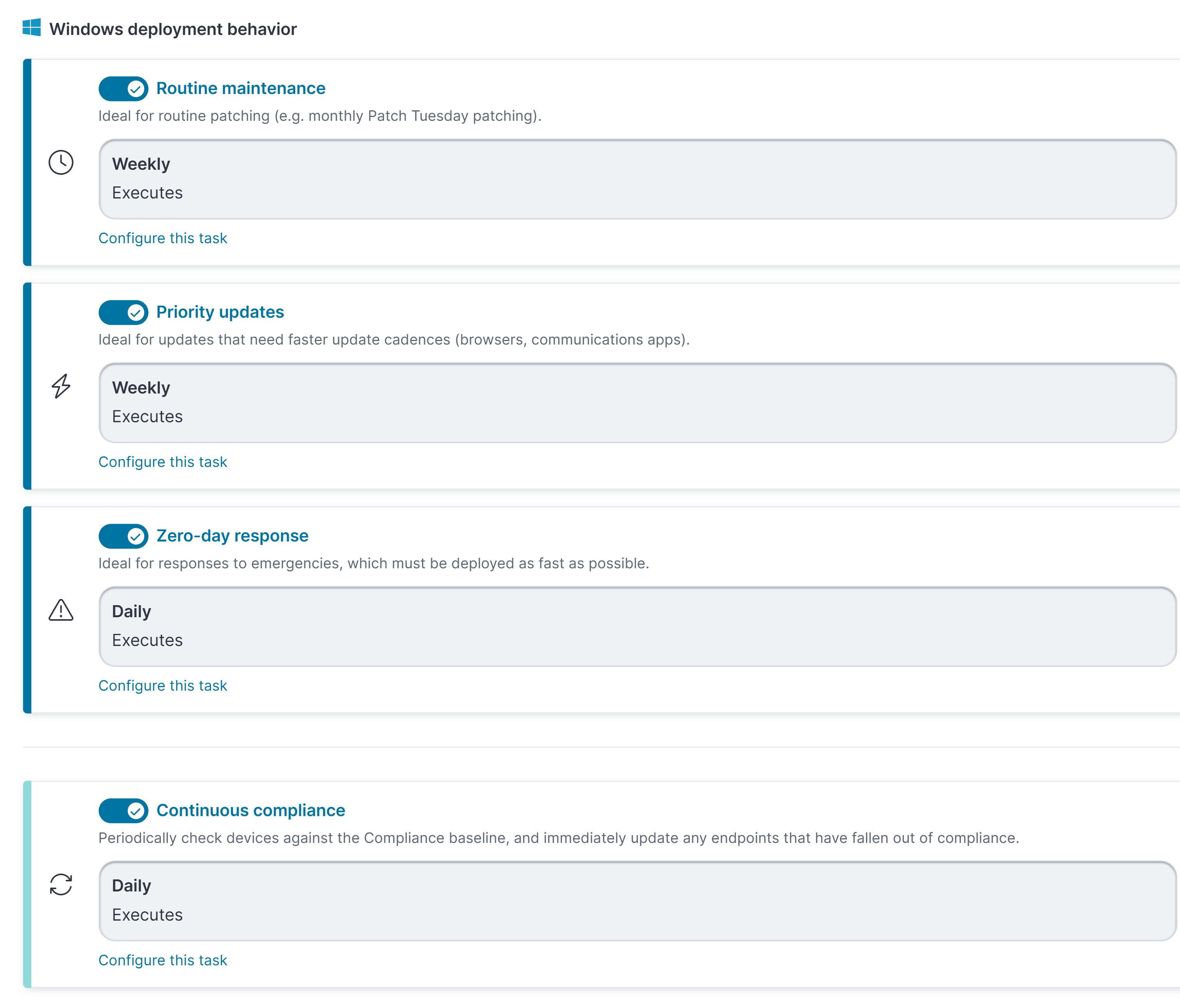
The Deploy by Risk feature supports multiple parallel deployment tasks: monthly regular maintenance, weekly priority updates, and immediate zero-day patches. This enables automatic update management that keeps systems current with the latest patches regardless of release timing.
Ring deployment
Ring deployment is an out-of-the-box solution for managing software rollouts with precision and control, making your operations more resilient and reducing downtime. Creating deployment rings lets you group devices strategically based on your organizational needs and risk tolerance. With options for both automated and manual patch promotion, you can thoroughly test and validate patches in smaller groups before broader distribution, getting critical updates adopted quickly while minimizing risk. Comprehensive ring status views give you real-time insights into deployment progress for predictability and proactive issue resolution. This phased approach lets you confidently manage patch cycles, improve compliance, safeguard systems against vulnerabilities, and maintain productivity across the organization.
Continuous compliance
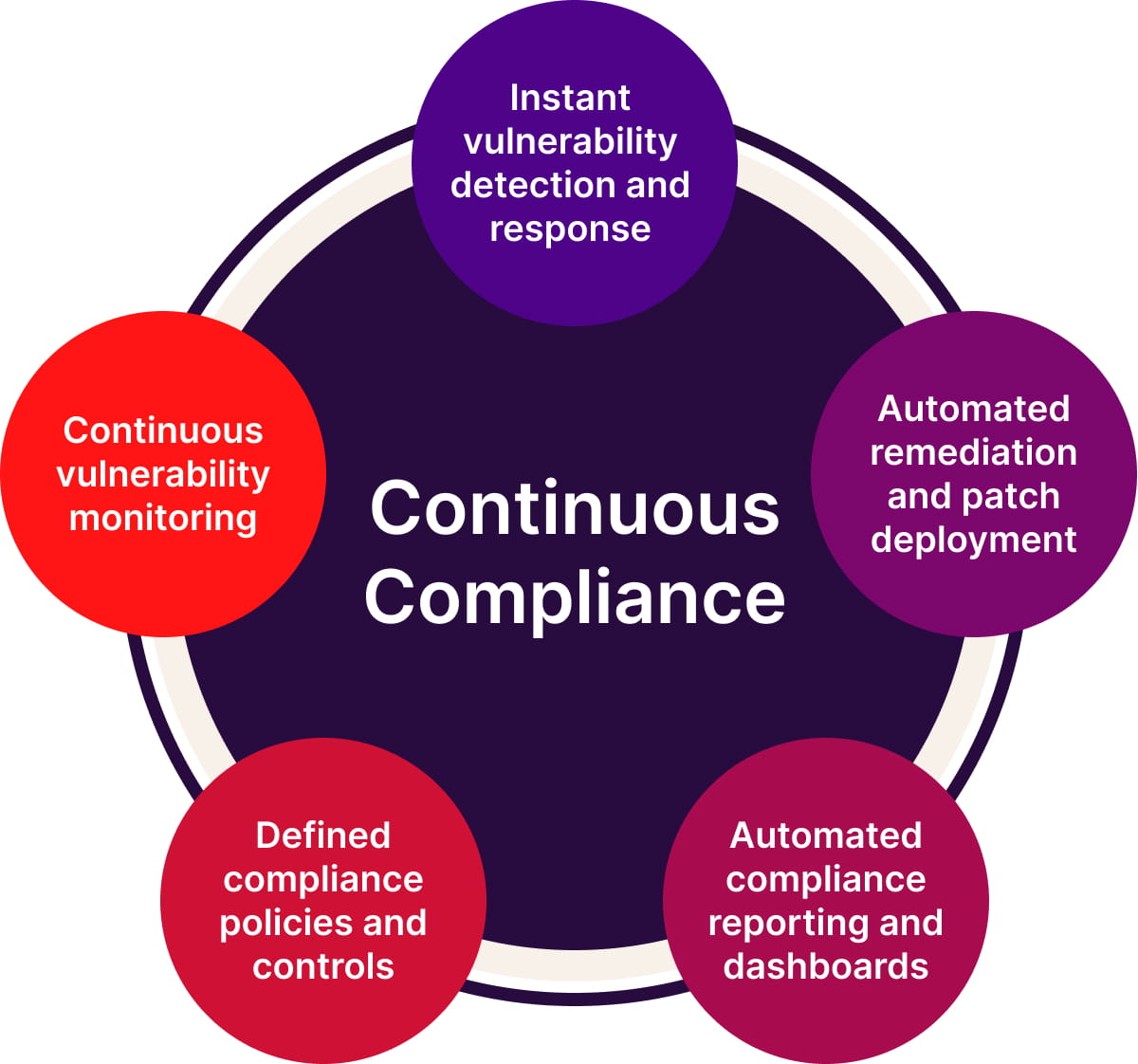
Organizations require high patch deployment success rates to meet regulatory compliance objectives, yet even with sophisticated deployment strategies, unexpected problems such as device failures or network outages may prevent patching from completing successfully, leaving endpoints non-compliant. Ivanti's Continuous Compliance feature transforms patch management from scheduled tasks to always-on enforcement by automatically curating a Compliance Baseline of required patches and triggering out-of-band remediation when devices fall out of compliance. This ensures organizations consistently meet compliance targets while eliminating manual intervention and allowing IT teams to focus on strategic initiatives.
From on-premises to cloud
Start your journey from on-prem patch management to the cloud with Ivanti Neurons for Patch Management. Our cloud-native solution lets you transition at your own pace instead of being forced to “rip and replace.” Ivanti’s migration experience provides visibility into the devices managed in the cloud alongside those managed with on-prem Ivanti patch management solutions.
Patch reliability
Patch reliability is crucial for system integrity and security. Ivanti leverages anonymized deployment data and advanced testing to assess patch effectiveness and safety before deployment. The Ivanti Neurons Agent autonomously configures and distributes tested patches to thousands of devices quickly, identifying potential issues early. IT teams can make informed patching decisions, minimizing the risk of faults and enhancing IT environment stability and performance. This method reduces downtime and ensures continuous protection against vulnerabilities.
Heterogenous on one platform
A heterogeneous platform is crucial for upholding strong security standards across diverse IT environments, allowing for efficient and proactive IT security risk management. Ivanti Neurons for Patch Management supports Windows, MacOS, Linux, and third-party applications with a unified management experience that simplifies oversight of various systems and boosts productivity.
Using a single platform provides consistent security policies and boosts operational efficiency without switching between different patch management systems. It reduces complexity and the risk of oversight, ensuring comprehensive protection and visibility across all endpoints. By quickly identifying vulnerabilities and inconsistencies, this comprehensive approach prevents breaches, reduces downtime and recovery costs, and safeguards organizational assets.
Compliance reporting
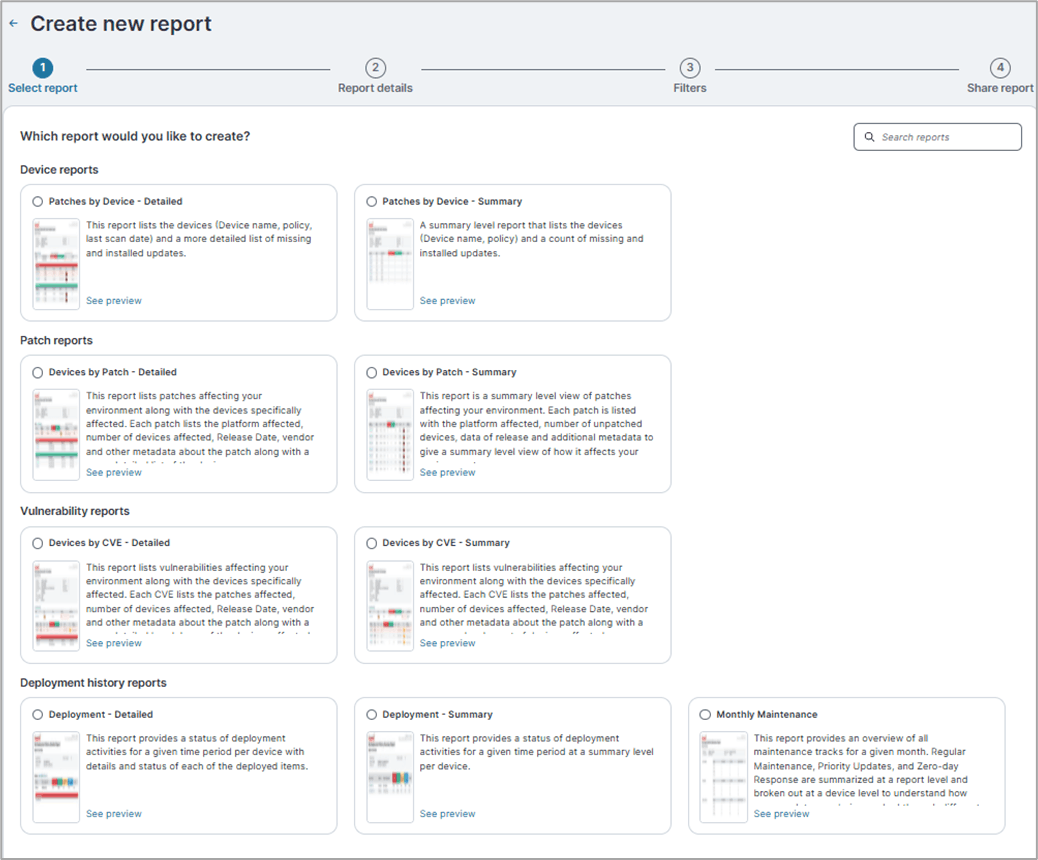
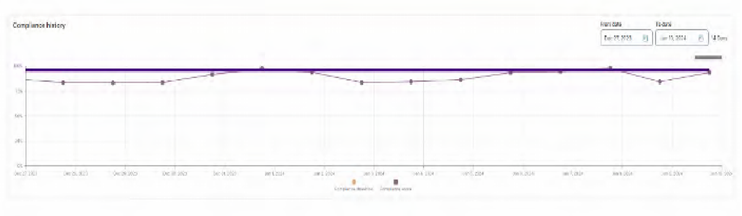
Compliance reporting in patch management is crucial. Ivanti’s automated system focuses on risk-based KPIs that reflect real-world risks. It ensures all patches are documented and meet regulatory standards, greatly reducing non-compliance. The system aligns patch management with security needs by basing SLAs on the update’s release date rather than typical IT operational timelines. This is crucial as security teams face challenges with continuous patch cycles. By recalibrating SLAs from a vulnerability exposure standpoint, IT departments can better meet security requirements while managing operational demands — strengthening the organization’s overall security framework.
Changing How We Measure: “Exposure Time”
Chasing the numbers:
Updates release continuously. It is nearly impossible to achieve compliance.
Measure what matters:
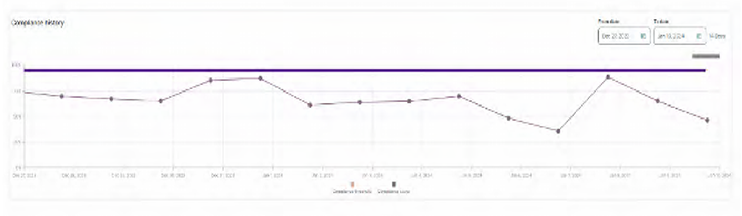
A risk-based KPI allows teams to focus on real-world risk and achieve compliance.
Breaking down barriers between IT and Security
Create parity across IT and Security teams by offering equal access to crucial information such as SLA tracking and risk-based intelligence. This fosters a comprehensive view and a common language that promotes quick and effective cross-functional actions. A unified approach reduces friction and enables coordinated responses to stakeholders. Sharing insights on patch reliability, derived from crowdsourced data and deployment telemetry, allows for proactive evaluations and prevents failed deployments to ensure compliance with SLAs. This strategy improves coordination and strengthens the organization’s security posture.
IBM, “Cost of a Data Breach Report 2024,” 2024. https://www.ibm.com/reports/data-breach
Verizon, “2024 Data Breach Investigations Report,” 2024. https://www.verizon.com/business/resources/reports/dbir/
Google, “A Year in Review of Zero-Days Exploited In-the-Wild in 2023,” March 2024. https://cloud.google.com/blog/topics/threat-intelligence/2023-zero-day-trends
Richard Fang, Rohan Bindu, Akul Gupta, Qiusi Zhan, Daniel Kang, “Teams of LLM Agents can Exploit Zero-Day Vulnerabilities,” 2 June 2024. https://arxiv.org/abs/2406.01637.
Ivanti, “Patch Management Challenges: Survey Results and Insights as Organizations move to Everywhere Workplace,” 7 October 2021. https://www.ivanti.com/resources/v/doc/ivi/2634/712cff539c8a.
Securin, “Ransomware Report 2023 Year in Review,” 2024. https://www.securin.io/ransomware-report-2023-year-in-review-download/.